



How to Make Proper Yorkshire Puddings: A Step-by-Step Guide
Ask anyone who grew up in Yorkshire and they will tell you the same thing: a Sunday roast is only as good as the pudding that arrives before it. Yet plenty of home cooks still end up with flat, pale discs that taste mostly of oil. The good news is that the method is not complicated. It comes down to four things — batter you have left alone for a while, a properly hot oven, fat that is genuinely hot, and the patience not to open the door.
What a Proper Pudding Actually Is
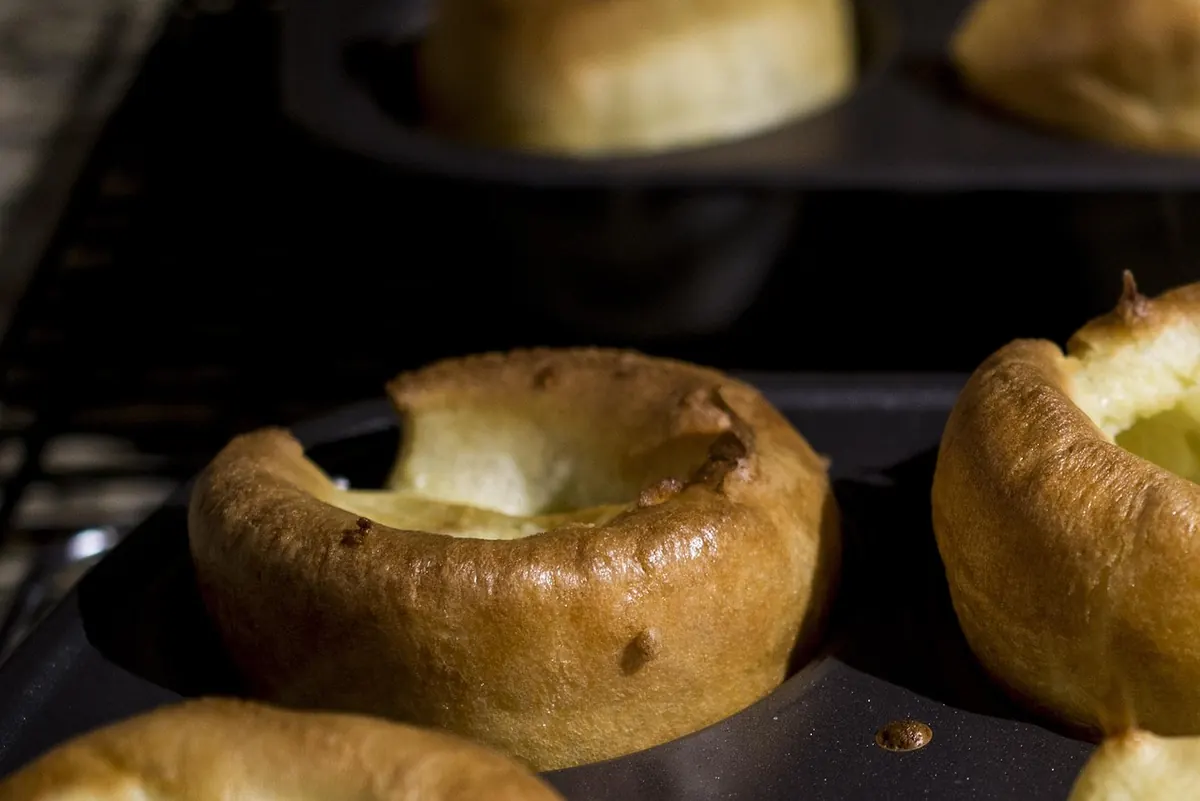
A good Yorkshire pudding is deep brown and crisp at the rim, with a soft, slightly custardy base and a hollow centre that will happily hold a spoonful of gravy. It should rise well above the tin and hold that height once it comes out, rather than collapsing the moment it hits the worktop.
Individual puddings baked in a bun tin are the easiest place to start because the smaller volume of batter heats through quickly. The traditional alternative — one large tin, baked under the joint and cut into squares — works just as well, though it needs a few extra minutes and a slightly steadier hand.
The Batter: Equal Volumes, Nothing Fancy
The old rule is equal volumes of eggs, flour and milk. It is a reliable starting point because it adapts to whatever eggs you have. Weigh your eggs in their shells, then match that weight in plain flour and roughly the same volume in milk.
Ingredients for about 12 puddings
- 140g plain flour
- 4 large eggs
- 200ml full-fat milk
- 2 tbsp cold water
- A good pinch of fine salt
- Beef dripping, lard, goose fat or a neutral oil such as rapeseed, for the tin
Mixing
Tip the flour and salt into a bowl and make a well in the middle. Crack in the eggs and whisk from the centre outwards, drawing the flour in gradually until you have a thick, sticky paste. Add the milk in a slow stream, whisking as you go, then stir in the water.
You are aiming for the consistency of single cream — thin enough to pour easily, thick enough to coat the back of a spoon. If it looks like double cream, loosen it with a splash more milk. Don't chase out every last lump; a few small ones will disappear during the rest, and over-whisking only makes the batter tough.
Why the Rest Matters
This is the step most people skip and the one that makes the biggest difference. Leaving the batter to stand gives the flour time to hydrate properly and the gluten time to relax. The result is a pudding that rises more evenly and has a better texture — lighter inside, crisper outside.
Thirty minutes on the worktop is the minimum. An hour is better. If you are organised, make it the night before, keep it covered in the fridge and bring it back to room temperature for half an hour before baking. Cold batter hitting hot fat is exactly what you want; fridge-cold batter hitting hot fat can cool the tin and stall the rise.
Heat and Fat: The Two Things People Get Wrong
Yorkshire puddings are not a gentle bake. They need a hot oven and fat that is on the edge of smoking, so the batter sets and steams almost the instant it lands.
Preheat the oven to 220°C (200°C fan, Gas 7). Put a teaspoon or so of fat into each hole of a metal bun tin — enough to cover the base generously, roughly 3–4mm deep — and slide it into the oven for at least 10 minutes. Some cooks give it 15. The fat should be shimmering, faintly hazy and almost too hot to look at. If it isn't, the batter will sit there and fry flat instead of climbing.
If you are baking a large pudding alongside a roast, spoon the dripping from the joint into the tin and let it heat through properly before you pour. A metal tin conducts heat far better than a flimsy one, and a dark tin browns faster than a pale one, so keep an eye on the first batch.
Step-by-Step Method
- Make the batter, cover it and leave it to rest for at least 30 minutes.
- Heat the oven to 220°C (200°C fan, Gas 7) with a shelf in the middle.
- Add fat to the tin and put it in the oven for 10–15 minutes, until the fat is very hot.
- Give the batter a quick stir — it will have separated slightly — and pour it into a jug.
- Working quickly, pull the tin out, set it on a stable surface and pour batter into each hole, filling them about two-thirds full.
- Return the tin to the oven immediately and shut the door.
- Bake for 20–25 minutes without opening the door, until risen, deep golden and crisp.
- Serve straight away, or keep them in a warm oven for a few minutes if the rest of the meal needs catching up.
The batter will sizzle and set at the edges as you pour. That is the sound of it working. Move briskly between steps five and six, because the tin loses heat every second it sits on the worktop.
When It Goes Wrong
- Flat and pale: the oven or the fat was not hot enough, or the tin went in before it had properly preheated.
- Soggy in the middle: the batter was too thick, or they came out a few minutes early. Give them another five.
- Stuck to the tin: not enough fat, or the tin was not hot when the batter went in.
- Risen on one side only: the tin was not level, or it sat too close to another tray and blocked the heat.
- Collapsed after coming out: the door was opened too early, or they were left standing in a cold kitchen.
The Rules Worth Remembering
Hot oven, hot fat, rested batter, door shut. If you get those four right, everything else is tweaking. Practise with a single tray of small puddings rather than saving the recipe for a big occasion, and you will quickly learn how your own oven behaves — most run a little hotter or cooler than the dial suggests.
Leftovers, should you have any, reheat well in a hot oven for four or five minutes rather than a microwave, which will soften them. And if the first batch is imperfect, don't adjust six things at once. Change one variable, bake again, and you will land on your own reliable version soon enough.
Photo: cbertel / Pixabay