

Checklist: How to Build a Better Bedtime Routine for Busy Weeks
A good night's sleep is rarely decided at 11pm. It's the sum of small choices made over the hours before it, and some of them much earlier in the day. In a busy week, when work runs late and the kitchen still needs clearing, the wind-down is usually the first thing to go. So the routine needs to be short enough to survive a bad day and specific enough that you don't have to think about it. The checklist below is designed to be trimmed rather than followed perfectly. Take what fits, ignore the rest, and give it a fortnight before you judge it.
Fix your wake-up time first
Bedtime is unreliable. Meetings overrun, trains get cancelled, a friend rings, and suddenly it's midnight. Your wake-up time is easier to control, and it quietly sets everything else: when you start feeling sleepy, when you get hungry, how alert you feel mid-morning.
Aim to get up at roughly the same time every day, weekends included, within about an hour. If that sounds brutal, start with weekdays only and add Saturday once it feels normal. The advantage is that you stop relying on willpower at night. You're not forcing sleep; you're giving your body a reason to be tired at the right time.
A few practical bits: put your alarm across the room so you have to stand up to silence it. Open the curtains straight away. And if you can, step outside for five minutes within half an hour of waking — daylight does more for your body clock than any app.
Build a wind-down window of 45 to 90 minutes
You don't need a long ritual, you need a runway. Going straight from emails to lights-out is like braking hard on a motorway; the jolt is the problem.
Forty-five minutes is realistic for most people, and ninety is generous for those who can manage it. The aim is to lower the volume of the day gradually. Some of that time should be genuinely boring: tidying up, laying out tomorrow's clothes, reading something printed, a warm shower. Boredom isn't a failure of the routine, it's the mechanism.
Keep the sequence the same, not the timing
It helps to do things in a fixed order. Tea, then teeth, then alarm set, then ten pages of a book. A set order removes decisions, and decisions are what you're short of at 10.40pm. Do the same three or four things in the same sequence and your body starts to recognise the pattern even when the clock moves.
One more thing: if you're lying awake for what feels like a long stretch, get up. Sit somewhere dim with a dull book until you feel sleepy, then go back. Staying in bed and getting frustrated teaches your brain that bed is a place for thinking.
Bright mornings, dim evenings
Light is one of the strongest signals your body uses to work out what time it is, and plenty of us get it the wrong way round — dark mornings, bright evenings.
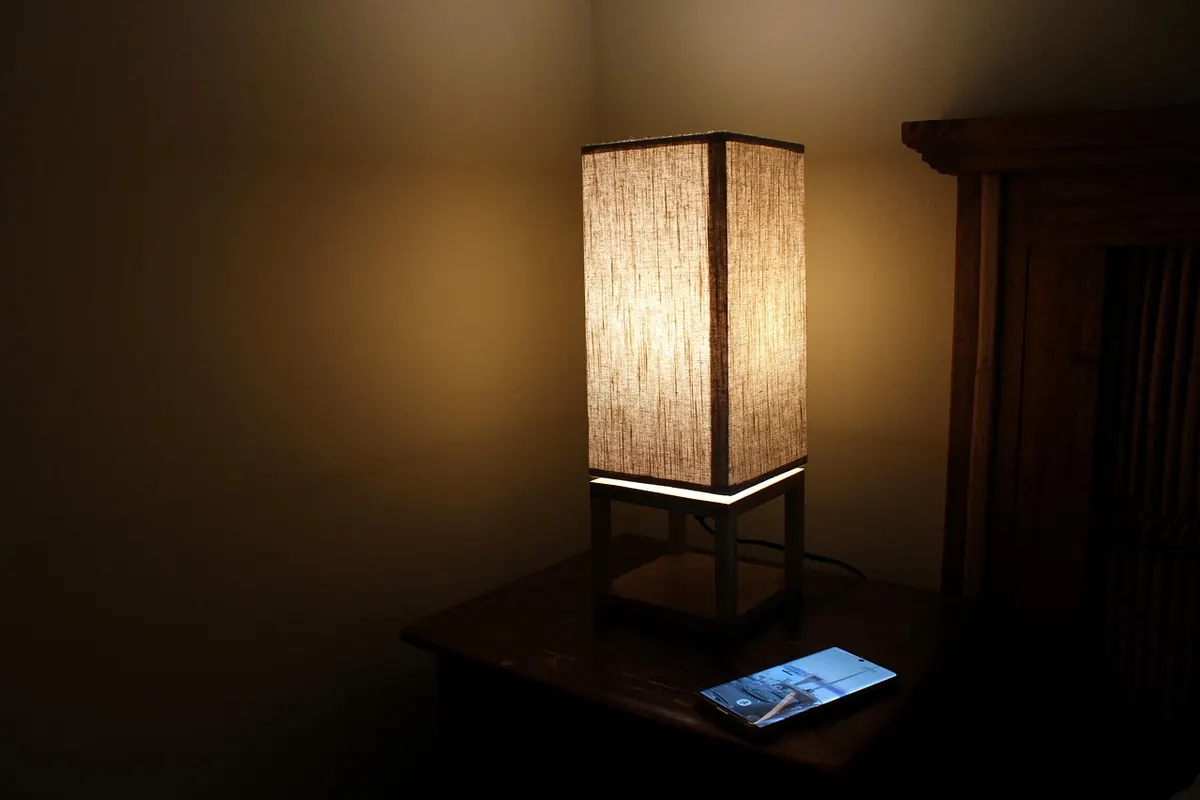
Push towards more light early: curtains open, a walk, breakfast near a window, a bright desk lamp if you work from home in winter. Then reverse it after dark. Turn off the main ceiling light and use lamps. Keep them warm rather than blue-white, and dim things further as the evening goes on, especially in the last hour.
The bedroom itself matters too: dark, cool and reasonably quiet. An eye mask and earplugs are inexpensive fixes if blackout blinds and double glazing aren't on the table.
Give screens a job rather than a ban
A blanket "no phones after nine" rule sounds admirable and collapses by Wednesday. Try giving screens a clear end point instead.
- Charge the phone outside the bedroom, and buy a cheap alarm clock so you don't need it as a clock.
- Set a gentle alarm 30 to 45 minutes before lights-out as the cue to stop. When it goes, put the device down and get on with the boring part of the evening.
- Shut the laptop even if the phone stays in use. Work email at 11pm is a different animal from a crossword.
- Turn off notifications for anything that might need an answer. If a message can wait until morning, it shouldn't be able to reach you tonight.
Worth knowing: the brightness of a screen is usually less of a problem than what's on it. Scrolling a news feed, reading a group chat about a work problem or watching something tense all keep your mind running. Reading fiction on a device isn't the same activity, even if the screen looks identical.
Rethink caffeine, alcohol and late drinks
Caffeine hangs around longer than most people assume. For many, an afternoon coffee is still doing something at bedtime. Pick a cutoff that suits you — early afternoon is a safe default — and remember it isn't just coffee. Tea, cola, energy drinks, some cold remedies and certain painkillers contain it too.
Alcohol is the other one. It can make you feel drowsy, but it tends to break up the second half of the night, which is why a couple of glasses can leave you wide awake at 3am. Drink most of your water earlier in the day rather than a pint at 10pm, unless you enjoy getting up twice.
If you take prescribed medication and you're unsure how it affects your sleep, ask a pharmacist or your GP rather than adjusting anything yourself.
Your evening checklist
Copy this, cut it down, stick it on the fridge.
- Wake-up alarm set for the same time as yesterday, placed away from the bed.
- Last caffeine consumed by early afternoon.
- Dinner finished at least two hours before bed, where the day allows.
- Screens parked 30 to 45 minutes before lights-out; phone charging outside the bedroom.
- Ceiling light off, lamps on, brightness down.
- Tomorrow's first task written on paper rather than left circling in your head.
- Wind-down sequence done in the same order: teeth, clothes out, alarm, book.
- Bedroom cool, dark and quiet, with earplugs or an eye mask if the neighbours have other ideas.
- Going to bed within the same window each night, rather than at an exact minute.
- If you're still awake after roughly 20 minutes, get up and do something dull in low light.
When the week goes sideways
Some weeks the routine won't survive. Late trains, poorly children, a deadline that swallows the evening. What matters is that you don't abandon the whole thing because one night went badly.
After a bad night, resist the urge to lie in. Get up at your usual time, get some daylight, and if you can, take a short nap in the early afternoon — no longer than about twenty minutes, and not after mid-afternoon. Chasing lost sleep with a two-hour lie-in on Sunday mostly shifts the problem to Monday.
If you can only hold on to two things, keep the wake-up time and the screen cutoff. Those two prop up everything else. And if you've been sleeping badly for weeks rather than days, or you're waking up gasping, or snoring heavily enough that someone has mentioned it, speak to a GP. A bedtime routine is a good tool, but it isn't a diagnosis.
Photo: ianvanderlinde / Pixabay